Choose your language
Teaching reading and listening — Part 1: Reading
How do you teach reading in your English class? For many teachers, it looks like this: students open the book, one student reads a paragraph aloud, then the next student reads. Then comprehension questions. Then move on.
This is the most common way reading is taught around the world. But research shows it is one of the least effective. The students taking turns are stressed. The students listening are bored or lost. And almost nobody is actually reading — they are waiting their turn to perform.
Real reading is silent. It is active. It involves predicting, finding, understanding, and reacting. Good reading lessons teach students how to do these things, not just push them through a text.
In this lesson, we will look at how to make reading lessons that actually build reading skills — with the textbooks and resources you already have.
Q2: Which of these problems do you have when teaching reading? (Tick all that apply)
- If students seem bored, it is usually not the text that is the problem — it is what we ask them to do with it. The same text can be deadly with one approach and engaging with another
- Students answering questions correctly without really understanding is very common. They have learned to scan for answers without reading the whole text. The fix is asking better questions
- Reading aloud one by one is the default in many classrooms but is not really teaching reading. We will look at why — and what to do instead
- Reading is a skill, not a single activity. There are many different reading sub-skills (scanning, reading for detail, predicting). Students learn faster when you teach these explicitly
- You do not need new textbooks. The biggest improvements come from changing what you do before, during, and after reading the text
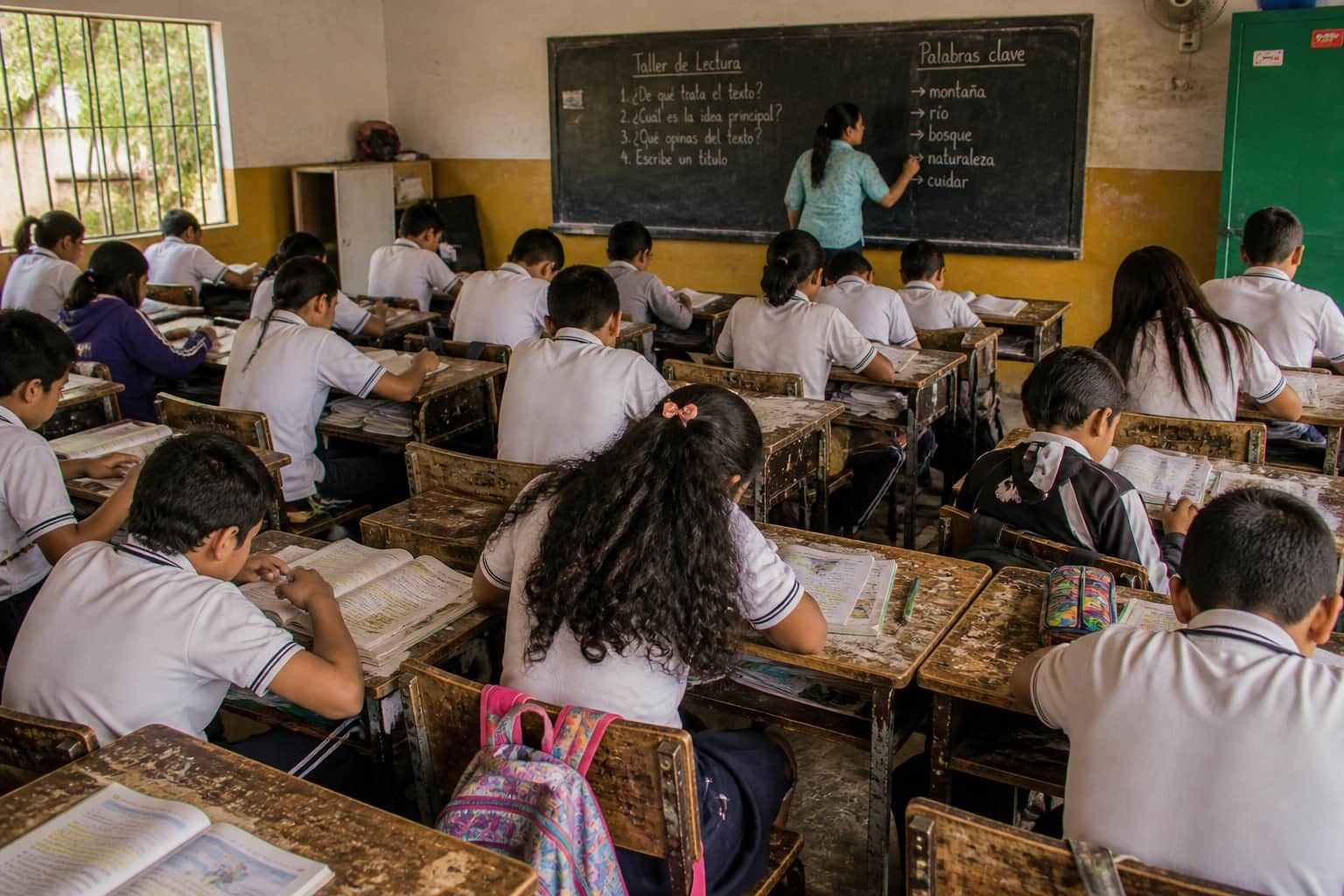
The biggest single change you can make to reading lessons: stop treating the text as the lesson, and start treating it as the middle of the lesson.
A good reading lesson has three stages. Pre-reading gets students ready — activating what they know, predicting what is coming, learning key words. While-reading gives them a focused task to do as they read — not just “read the text”. After-reading uses what they read — to discuss, react, write, or imagine.
Each stage teaches a different reading skill. Together, they turn a text from a page in a book into a real reading experience.
Most teachers spend most of the lesson on the “while” stage and skip pre and post. Be honest about your own pattern.
- The most commonly missed stage is pre-reading. Teachers feel pressure to “get on with the text” and skip the 3–5 minutes that would make the reading 10x more useful
- The second most missed is after-reading. Once students have answered the questions, the lesson often just ends. The chance to use the text is lost
- If you only have time for two stages, do pre-reading + while-reading. Preparation matters more than reaction
- Even short stages help. 2 minutes of pre-reading is far better than 0 minutes. You do not need to do everything every lesson
- Once students get used to this rhythm, they expect it. They predict, they read with focus, they react. The pattern itself becomes a habit of good reading
These are real situations from EFL classrooms. The right answer is the one most likely to actually build reading skills.
Think about a real text you teach. The more concrete your ideas, the easier they are to use next week.
| Technique | Your specific idea |
|---|---|
| Pre-teach 4–5 key words before reading | |
| Use the title or a picture for prediction | |
| Give a clear task BEFORE students read | |
| Use “Read and Look Up” instead of reading aloud | |
| End with a personal or creative response |
| Technique | How it can work |
|---|---|
| Pre-teach 4–5 key words before reading | Look at the text the night before. Pick the 4–5 hardest words students need to understand the main idea. Write them on the board. Give a quick example or L1 translation. Now students start reading with the hardest words already in their head. |
| Use the title or a picture for prediction | Write the title on the board. Cover the text. Ask: “What do you think this story is about? Who are the characters? Where is it?” Take 4–5 ideas. Now students want to read the text to see if they were right. |
| Give a clear task BEFORE students read | Instead of “Read pages 23–24,” say: “Read pages 23–24 and find three things the character does. Underline them.” The task gives reading purpose. |
| Use “Read and Look Up” instead of reading aloud | In pairs, Student A reads a sentence silently, looks up, and says it to Student B from memory (in their own words is fine). Student B does the next sentence. Far better than one-by-one reading aloud, and every student is active. |
| End with a personal or creative response | After comprehension questions, ask: “If you were the character, what would you do differently?” or “Draw what happens next.” or “In one sentence, what is the writer saying?” Two minutes, but the text actually lands. |
Q6. Watch the video below. Think about which change is easiest for you to try first.
Host: We have just looked at the three stages of a reading lesson. Now listen to three teachers. They share their problems first, then the changes they made.
Teacher 1: For years my reading lessons were the same. Open the book. Student 1 reads paragraph 1. Student 2 reads paragraph 2. Comprehension questions. Move on. The students were quiet but they were not really reading. They were just waiting their turn or staring at the page.
Teacher 2: My students could answer the comprehension questions. They got high marks. But if I asked them anything beyond the questions — what do you think? why did this happen? — they had nothing to say. They were finding answers, not understanding the text.
Teacher 3: I felt I was always running out of time in reading lessons. The text was long. The questions took ages. I never had time for any kind of follow-up. I felt the students were just doing reading, not actually getting better at it.
Teacher 1: I started giving a task before students read. Just one or two sentences: “Find three things the character does. Underline them.” Now they had a reason to read. The room went silent in a different way — not bored silent, but focused silent. Big change.
Teacher 2: I started adding two or three open questions after the comprehension ones. “Why do you think the character did this? What would you do?” In pairs first, then share with the class. Suddenly the text became something to think about, not just answer.
Teacher 3: I cut my pre-teaching time. Just five minutes before reading: title, prediction, four key words on the board. The reading itself went faster because students were prepared. I gained time for a short follow-up. The lessons became more complete — more learning, not more time.
Host: None of these changes need new textbooks. None of them take a lot of preparation. They are small adjustments to how we frame what already happens in the classroom — and they make a real difference to whether students are actually learning to read or just getting through pages.
Q7. For each technique, choose the option that best describes where you are now.
Choose a real text from your textbook. Write what you will do at each stage.
- A reading lesson has three stages: before (get ready), during (focused task), after (use the text). Most teachers spend all their time on the middle stage
- The single best change: always give students a task before they read. Never just say “read the text.” A task tells students how to read
- One-by-one reading aloud is not really teaching reading. Use silent reading with tasks, or pair techniques like “Read and Look Up” instead
- Pre-teaching 4–5 key words and using the title or a picture for prediction takes 3–5 minutes — and changes how students read the text
- Open questions and personal responses (“What would you do?” “What happens next?”) make the text matter to students. Without these, the text disappears the moment the bell rings
How useful did you find this lesson? Leave a rating and a comment to help other teachers.