Choose your language
Understanding why we teach
Teachers spend a lot of time planning lessons, teaching students, and marking work. However, it is also important to ask a bigger question: why do we teach? Education means different things to different people. For some students, school is a safe place. For others, it is a way to get a job in the future. Parents may see school as a path to success for their children. Teachers may see education as a way to support their community. Because these expectations are different, teachers often need to balance many ideas about the purpose of education. Think about your own classroom — why do your students come to school? What do parents expect from education? How does this affect what you do every day?
Q2: In your view, what do most of your students think is the main purpose of school? (Tick all that apply)
- Different people have different expectations about education
- Students may focus on safety, friendships, and learning new things
- Parents may focus on exams, jobs, and future opportunities
- Teachers must balance these expectations in the classroom
- Understanding these views helps teachers design more meaningful lessons
Think about the different priorities parents might have compared to their children. How might those differences affect your classroom?
- Parents often focus more on practical outcomes — exams, qualifications, and future employment
- Students may be more focused on friendships, enjoyment, and belonging
- These differences create challenges for teachers — but also opportunities to connect with both groups
- Understanding these views helps teachers design lessons that feel meaningful to more students
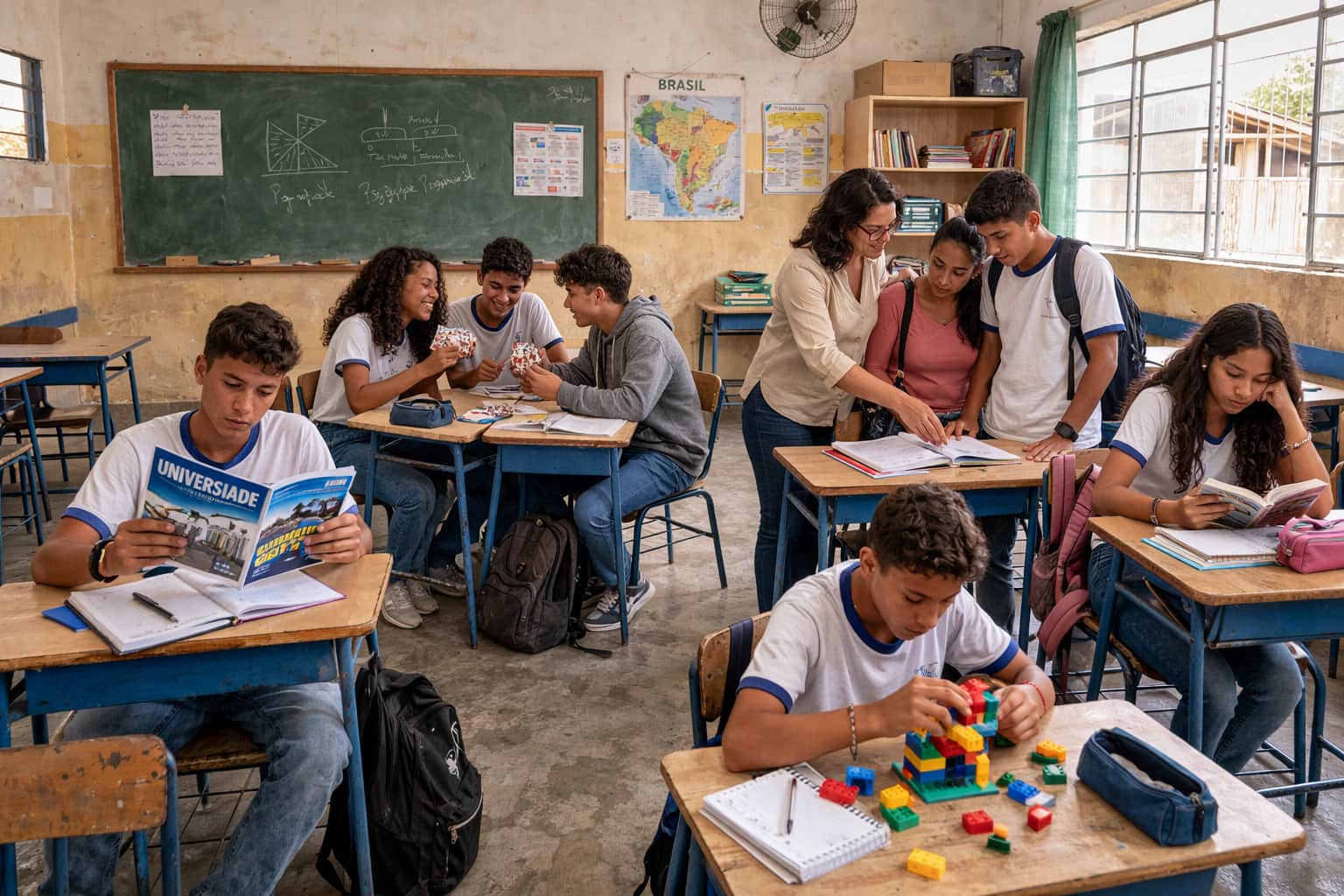
Look at the different students described above. What does each person’s behaviour tell you about why they come to school?
- The student reading a university prospectus may be focused on academic progress and the future
- Students socialising may value friendships and the social side of school
- The student building creatively may be motivated by practical, hands-on learning
- The student reading quietly may have personal curiosity and enjoy independent learning
- Students are motivated by a mix of learning, socialising, fun, and creativity — teachers should use a range of strategies to reach all of them
For each student type, write which strategies from the list would work best, and why.
| Student type | Best strategies and why |
|---|---|
| Academic / exam-focused | |
| Practical / creative learner | |
| Social / friendship-focused | |
| Quiet / independent learner |
Because students have different motivations, they respond to different teaching approaches. Here are some ideas:
| Student type | Strategies that work well |
|---|---|
| Academic / exam-focused | Connecting lessons to real life; encouraging goal-setting |
| Practical / creative learner | Using real objects or examples; giving chances to solve problems |
| Social / friendship-focused | Group work and pair activities; channelling their positive energy in class |
| Quiet / independent learner | Providing reading or thinking tasks; allowing time for individual work |
Q6. Read the transcript below of three teachers talking about how they connect lessons with students’ goals and motivations.
“I realised that some of my students were not motivated because they did not see how school helped them in real life. So I started discussing their future plans during lessons.”
“I ask students what they want to do in the future. Then I try to connect lessons with those goals.”
“Sometimes students think school is only about exams. I try to show them how learning helps them solve real problems.”
“When students see the purpose of learning, they become more interested in the lesson.”
“Even small discussions about students’ goals can help them feel more motivated.”
“When students understand why they learn, they participate more actively in class.”
Understanding why we teach helps us create lessons that are meaningful and motivating for students.
Q7. For each strategy, choose the option that best describes where you are now.
- Education has different meanings for different people — students, parents, and teachers may all have different expectations
- Understanding what motivates your students helps you design more meaningful lessons
- Students are motivated by a mix of learning, social connection, creativity, and preparing for the future
- Connecting learning to real life and students’ goals increases participation and engagement
- Small changes — like asking students about their goals — can have a big impact on motivation
How useful did you find this lesson? Leave a rating and a comment to help other teachers.