Choose your language
Creating assessments and exam success — Part 2: Helping students perform in exams
A well-designed exam is only half the work. The other half is whether students can actually show what they know on the day.
Many students who genuinely understand the material still do badly in exams. Their hand was shaking. The room was too hot. They had not eaten breakfast. The exam paper looked nothing like what they had practised. Their nerves swallowed everything they had learned.
For students in challenging circumstances, exams are often high-stakes — their futures may genuinely depend on them. And often, these students have less experience of formal exams, less time to prepare at home, and harsher physical conditions on the day.
In Part 2 of this series, we will look at three stages of exam support: before the exam (preparation), during the exam (conditions), and after the exam (feedback that feeds forward). None of this is about cheating or lowering standards. It is about giving every student a fair chance to show what they have learned.
Q2: Which of these affect your students’ exam performance? (Tick all that apply)
- If students panic at unfamiliar exam formats, that is a preparation problem — not their fault. Showing them past papers and giving them practice is the simplest fix
- Physical conditions (heat, noise, light, air) genuinely affect exam performance. Research is clear on this. Even small improvements help — and many cost nothing
- Hungry, tired students cannot show what they know. If you can support nutrition or rest before exams, you are improving learning, not just being kind
- Equipment problems for listening exams are common. Test the equipment in advance, several days before. If it does not work, plan a backup — like reading the transcript yourself
- Marks without feedback waste the whole exam. Students who fail and do not know why will fail again. Even brief, common-error feedback to the whole class is far better than nothing
- If you teach students with specific needs (poor eyesight, hearing difficulties, anxiety, dyslexia), make sure all the relevant people know about it — including invigilators and the head teacher
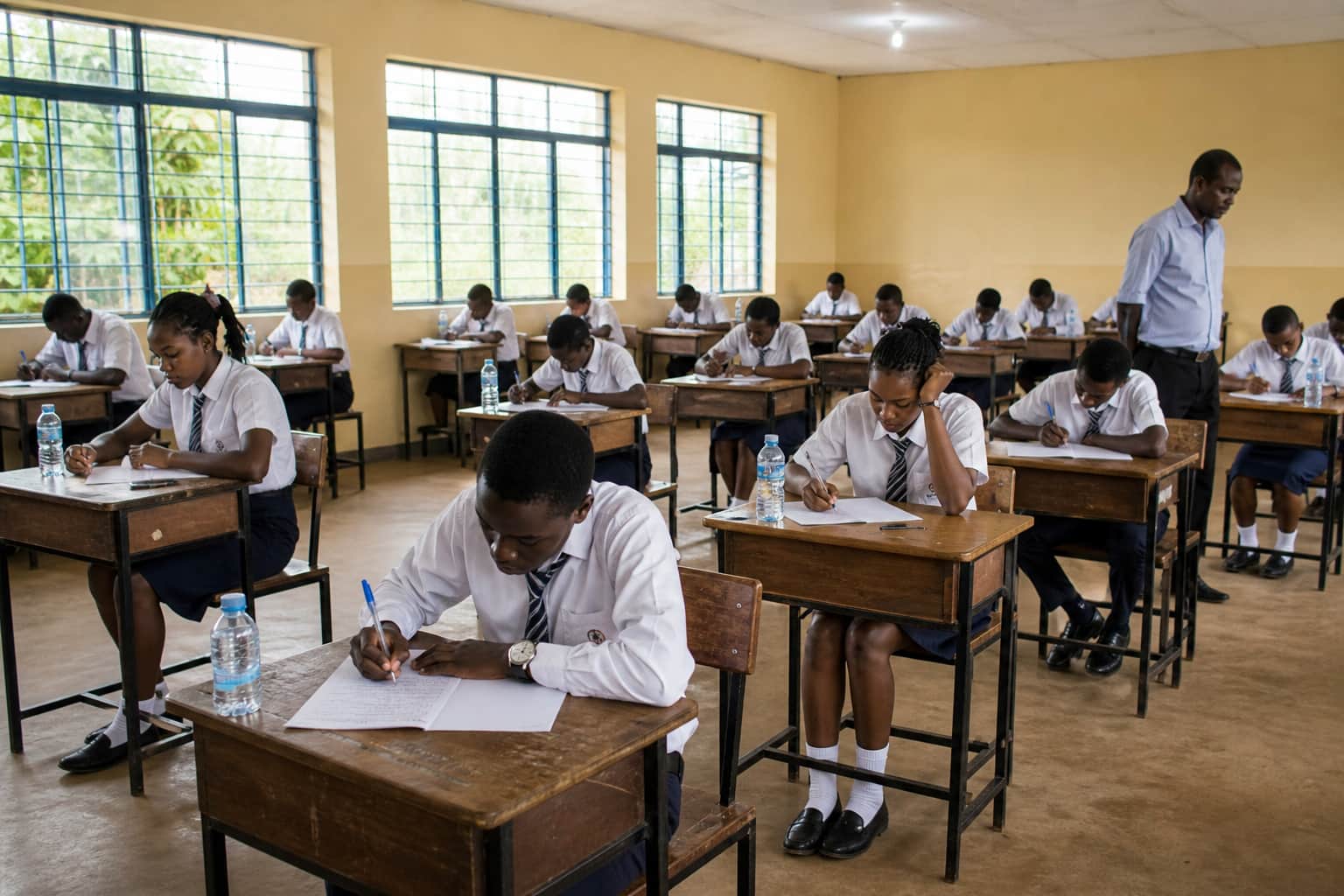
Exams should not be one-off events. They should be part of the learning process.
In challenging circumstances, exams often feel like sudden, isolated days of stress — and then nothing happens afterwards. Marks are returned. Students move on. The next exam comes. Whatever the student got wrong stays wrong, because no one ever explained why.
The shift this lesson asks: treat exams as a three-stage process. Before the exam, prepare students for what to expect. During the exam, give them the best possible conditions. After the exam, make sure they actually learn from it.
- Share previous exam papers (or examples of similar tasks)
- Ask students to predict what kinds of questions might come
- Practise the specific task types — reading an exam paper is not the same as doing one
- Test any equipment several days in advance — especially audio
- Make sure the head teacher and invigilators know about students with specific needs
- Plan something useful for students not taking the exam — do not let them lose a week of learning
- Light: remove anything covering windows; clean the windows; consider painting the room a brighter colour
- Air: open windows and doors to keep fresh air moving; CO2 build-up makes students sleepy
- Temperature: if it is hot, allow lighter clothing; if cold, allow extra layers
- Hydration: provide clean water for students to drink during the exam
- Food: if possible, allow snacks during the exam; consider an “exam breakfast” for students travelling far
- Invigilators: brief them clearly on their role — collecting papers, the toilet policy, what to do if a student is unwell
- Give whole-class feedback on the most common problem areas — not just what was right, but why
- Share example good answers for subjective tasks (anonymised, with permission), so students who did badly can see what good looks like
- Provide a set of correct answers students can check their own work against
- Build a learning portfolio for each student over time, so growth is visible
- Hold a brief staff meeting after each exam to discuss what worked and what to improve next time
meaningful feedback
on their exam
on improving
problem areas
on the
next exam
Most schools handle one or two stages well and skip another. Naming the gap is the first step to closing it.
- The most commonly weak stage is After. Marks are recorded. Papers are filed. Students never see why they got things wrong, so they cannot fix them
- The Before stage often falls down because we assume students “know what to do” in an exam. They often do not, especially if they are inexperienced with formal testing
- The During stage often gets ignored because conditions feel out of our control. But many improvements (open windows, water, brighter walls, lighter clothing) cost little or nothing
- If the After stage is weak, look for one small change you can make. Even five minutes of whole-class feedback after an exam is far more useful than no feedback at all
- Talk to colleagues about this. Exam improvement works best as a whole-school effort — one teacher cannot fix invigilator briefings or institutional feedback systems alone
These are real moments from teachers’ experience. The right answer is the one most likely to give every student a fair chance to show what they know.
You do not need to fix everything. One small change per stage is plenty — and far better than trying everything and doing none of it well.
| Stage | One specific improvement I will make |
|---|---|
| BEFORE the exam (preparation) | |
| BEFORE the exam (practical setup) | |
| DURING the exam (physical conditions) | |
| DURING the exam (student wellbeing) | |
| AFTER the exam (feedback) |
Realistic improvements at each stage:
| Stage | Examples that work |
|---|---|
| Before — preparation | Two weeks before the exam, share an example of the previous year’s paper. Ask students to predict question types. Run a 30-minute practice with a similar (shorter) task. |
| Before — practical setup | Three days before, test the audio equipment with the actual room. Brief invigilators in writing, even if it is a single page. Identify any students with specific needs and tell relevant staff. |
| During — conditions | Open all windows. Remove anything covering them. Allow light clothing. Place a jug of water at the front of the room with cups. Five minutes of preparation = a much better exam environment. |
| During — student wellbeing | If possible, run an “exam breakfast” for students who travel far. Allow students to keep a small snack on the desk. Place a plant in the corner if you can — even small changes to air quality help. |
| After — feedback | Spend 15 minutes of the next lesson identifying the 3–4 most common mistakes. Show one good answer for each subjective task (with permission, anonymised). Tell every student one specific thing to work on for next time. |
Q6. Watch the video below. Think about which change is easiest for you to try first.
Host: We have just looked at three stages of exam support. Now listen to three teachers. They share their problems first, then the changes they made.
Teacher 1: Every year I would prepare students for exams by going over content. Reading the textbook, going through grammar, reviewing vocabulary. But on the day, students panicked. They did not know how to manage their time. They did not understand what the questions wanted. They had never seen an exam paper close up before walking into the room. The format was the problem — not the content.
Teacher 2: Our exam room was hot. The students were sweating. The windows had old posters covering them, blocking out the light. By the second hour, students were yawning, fading. Their handwriting got messier. Their answers got shorter. I never connected this to the room itself. I just thought they were lazy or unprepared.
Teacher 3: I always handed back exam papers with marks at the top. The students looked at their marks. They put the papers in their bags. We moved on. Three months later, the same students made the same mistakes again. Year after year. I had no idea I was wasting all that information.
Teacher 1: I started running practice exams — not full exams, just 30-minute samples with the same kinds of tasks. We talked about timing. We talked about what each question was really asking. The students who used to panic now walked in calmly. They knew what to do. Their marks went up — not because they knew more, but because they could now show what they knew.
Teacher 2: I took the posters down from the windows. I opened all the doors. I asked students to bring water bottles. I let them wear lighter clothes. The first time we tried it, the room felt different — lighter, fresher, calmer. Students wrote more. They stayed focused longer. Such small changes, such a big difference.
Teacher 3: I started taking 15 minutes of the next lesson to go through the most common mistakes. I would not give individual feedback — I could not, with 50 students. But the whole class would learn from those common errors. I also showed one or two example good answers. The students who had failed had something to aim for. Their next exams were better, and the same students stopped failing every term.
Host: None of these teachers had different exams or new resources. They thought about exams as a process — before, during, after — and made small, practical improvements at each stage. The result: students who genuinely showed what they knew, and used their results to keep learning.
Q7. For each strategy, choose the option that best describes where you are now.
One change. One stage. Pick the smallest realistic improvement that will make the biggest difference for your students.
- Exams should be a three-stage process: before (preparation), during (conditions), after (feedback). Most schools handle one or two stages and skip another
- Most exam panic comes from unfamiliarity. Practice with the format, task types and timing reduces anxiety far more than reviewing content
- Physical conditions matter. Light, air, temperature, water, food — these affect performance. Small, cheap improvements make a real difference
- Without feedback, exams are wasted. You cannot give individual feedback to every student in a large class — but whole-class feedback on common errors is far better than nothing
- The exam feedback cycle: meaningful feedback → improvement on weak areas → better next exam. Without all three steps, the cycle breaks and the same students keep failing
How useful did you find this lesson? Leave a rating and a comment to help other teachers.