Choose your language
Flexible lesson planning
Every teacher has experienced this: you finish everything you planned with ten minutes still to go. Or the opposite — the bell rings and you are only halfway through. Both situations are common, and both can be stressful.
Lessons rarely go exactly as planned. Students may work faster or slower than you expected. An activity might not work. There might be an interruption — a late student, a visitor, a power cut. In some schools, class sizes, timetables, and resources change without warning.
A flexible teacher is not someone who plans less carefully. A flexible teacher is someone who plans in a way that allows them to adapt. This means knowing which parts of your plan are essential, which can be shortened, and what to do when you have extra time or unexpectedly less.
Think about your own planning. Do you usually have too much material, too little, or does it work out well? What do you do when a lesson doesn’t go as planned? Do you have a backup activity ready, or do you improvise? In this session, we will look at practical strategies that give you more control, whatever happens in your classroom.
Q2: Which of these situations have you experienced? (Tick all that apply)
- These situations happen to every teacher — they are a normal part of teaching, not a sign of failure
- The solution is not to plan more — it is to plan more flexibly, so you can adapt without panic
- A well-designed lesson plan includes a clear core (what must happen), flexible extras (what can be cut or extended), and a backup activity
- Knowing which parts of your lesson are essential gives you control when things change
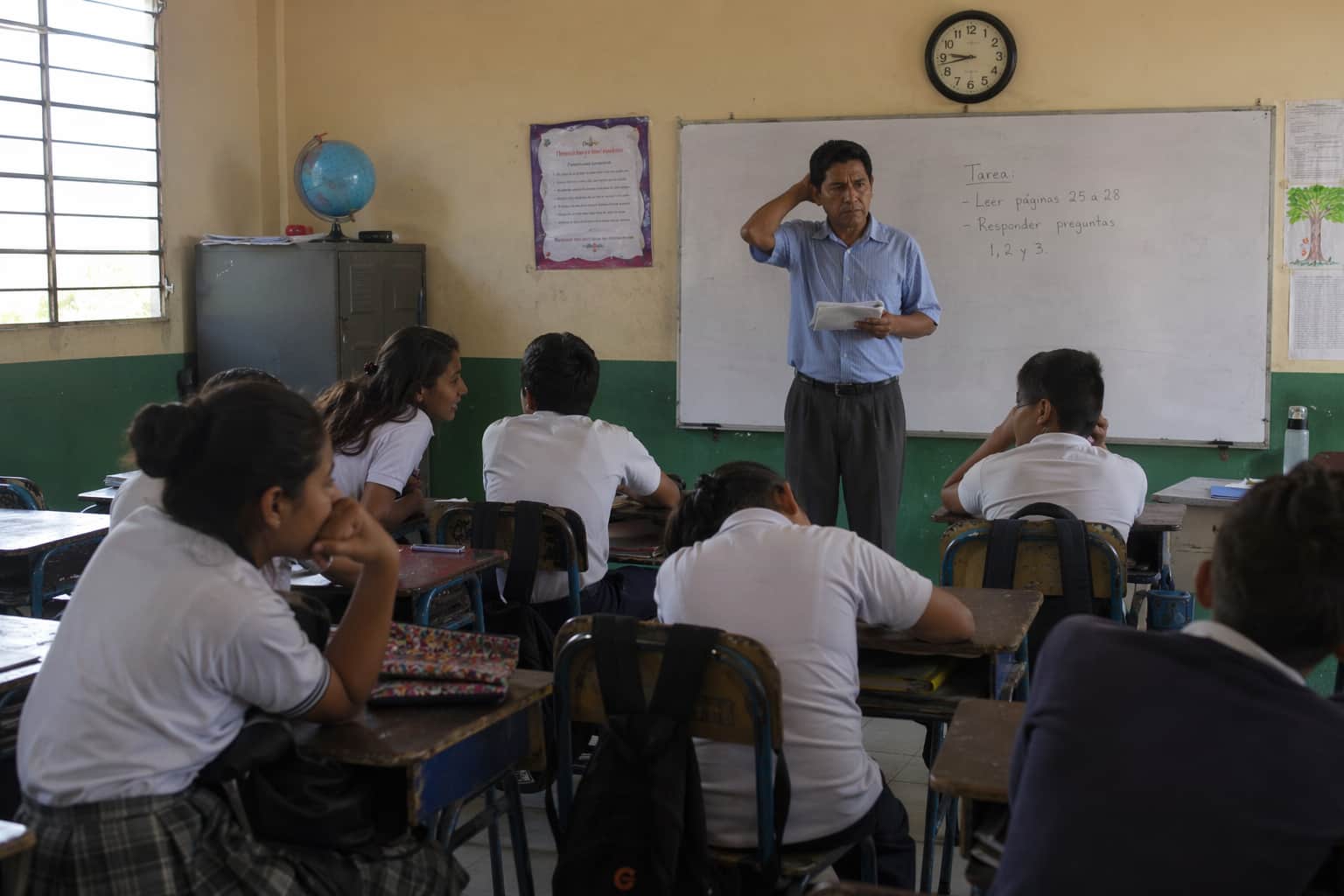
Think about behaviour, learning, student motivation, and what students take away from the lesson.
- Unstructured time at the end of a lesson often leads to low-level disruption and off-task behaviour
- Students who finish early and have nothing to do can become frustrated or disengaged
- The end of a lesson is a powerful moment — students remember how it felt to leave. Ending well consolidates learning
- Equally, rushing through too much material at the end means students may leave confused
- The last few minutes of a lesson are an opportunity — for review, reflection, or extension — not dead time
Think about what you know about the lesson content. What quick activities could have used the extra time productively?
- A backup activity — planned in advance — would have given the teacher something purposeful to move to immediately
- The teacher could have asked early finishers to check and improve their writing, add more detail, or help a partner
- A short discussion, a peer-review task, or a vocabulary challenge could have used the time well without any extra preparation
- Planning a backup activity before every lesson takes two minutes and prevents this situation entirely
You should always plan to have an emergency backup activity ready — something that lasts 5–10 minutes, requires no materials, and can be started immediately. Here are three types that work in almost any classroom.
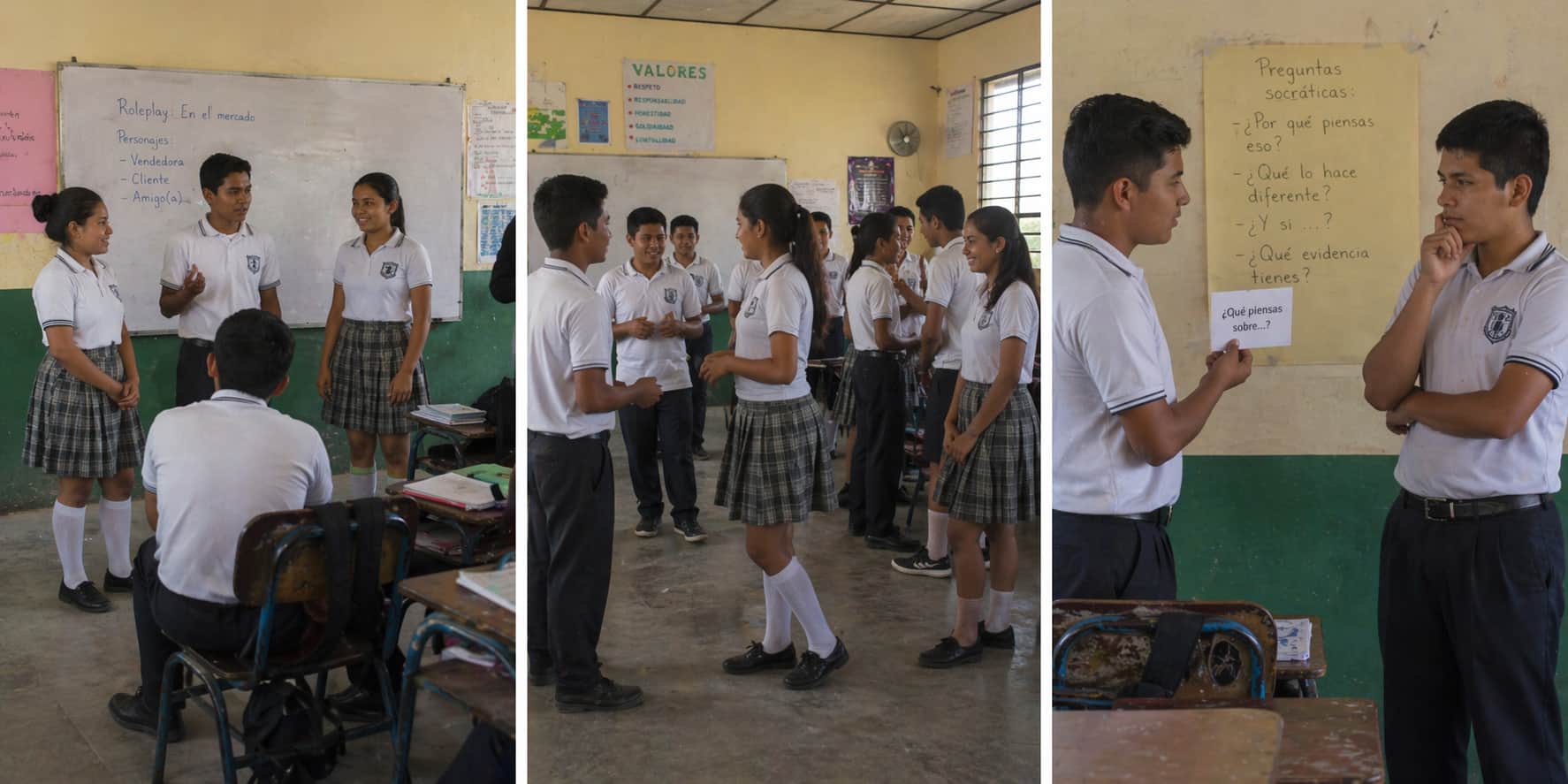
If students have recently read a story or passage, it can be used in multiple ways — all as short spoken activities. Choose one depending on the text.
- Perform the story: students create a short role play based on what happens in the story
- Extend the story: students talk about what happens after the end of the story
- Change the ending: students discuss an alternative ending — what could have happened differently?
- Create a new story: students choose their favourite character and invent a new story around them
Students stand up and move around the classroom, finding classmates who match a description. Give students 30 seconds to find as many people as they can who:
- Can speak three or more languages
- Have more than four siblings
- Travel at least an hour to school
- Like a particular sport, food, or subject
- Have done something specific (e.g. visited another city, cooked a meal this week)
You can adapt the prompts to fit the topic of the lesson. This works for any age group and requires no materials.
Socrates was an ancient Greek philosopher known for asking difficult questions. Divide students into pairs. Student A plays Socrates and asks Student B challenging questions about what they have learned in the lesson.
For example, if the lesson was about the present perfect tense, Student A might ask:
- How do you form the present perfect?
- Can you give me an example of the present perfect for something which has just happened?
- Can you teach me how to use it?
After one or two minutes, students swap roles and repeat. This activity works for any subject or lesson objective — just change the questions to match what was taught.
Write a specific example for your own classroom — the more concrete you make it now, the easier it will be to use in a real lesson.
| Backup activity type | Your specific example |
|---|---|
| Speaking task based on a text | |
| Mingling task | |
| Socratic discussion |
Backup activities solve the problem of finishing early. But what about over-planning — having too much material and running out of time? The solution is to think of your lesson plan in three layers.
Be honest — this is for your own reflection only.
- If “I know which parts are essential” is low: before each lesson, mark your plan with a star next to the 2–3 things students must do. Everything else is optional if time is short
- If “I have a backup ready” is low: write one backup activity into your plan before every lesson — it only takes two minutes
- If “I can adjust timing” is low: practise noticing where you are in your lesson at the halfway point. If you are behind, cut optional activities, not core ones
- If “I handle surprises calmly” is low: this gets easier with experience. Having a backup ready is the single biggest thing that reduces panic when something goes wrong
Layer 2 — Flexible: Activities that extend or deepen the core. These can be shortened, combined, or dropped if time is short. Use them if things are going well and you have time.
Layer 3 — Backup: A 5–10 minute activity ready to use if you finish early. It should require no extra materials and can be started in under a minute.
Q7. Watch the video below of teachers talking about how they plan more flexibly. As you watch, think about whose approach you would like to try.
“I used to panic when I finished early. I didn’t know what to do, so I just told students to revise. They stopped listening immediately. Now I always write one backup activity into my plan before every lesson. It takes two minutes and it has completely changed how I feel when things don’t go to time.”
“I started marking my lesson plan with stars. The starred activities are the ones that must happen. If I’m running out of time, I skip the unstarred ones and go straight to the core. Students always leave the lesson having done the most important things.”
“My favourite backup is the Socratic discussion. I tell students that one of them is the teacher and one is the student. The ‘teacher’ has to explain what we learned today. It is always lively, and students actually remember more because they have to explain it in their own words.”
“I teach large classes and students always finish at very different speeds. I started preparing a small extension task for fast finishers every lesson — usually just a question or two written on the board. It keeps them busy while I help slower students, and it doesn’t require any extra materials.”
“The mingling activity is one I use often. I adapt the prompts to connect with whatever we are learning. If we are studying food vocabulary, I ask: find someone who ate rice for breakfast, find someone who has never tried a mango. Students love it, and it uses the lesson content in a natural way.”
Flexible planning is not about being unprepared. It is about being prepared for more than one version of your lesson.
Q8. For each strategy, choose the option that best describes where you are now.
Be specific — which backup activity will you add? Which activities will you mark as core? Write it here so you don’t forget.
- Lessons rarely go exactly as planned — flexible planning means being prepared for more than one version of your lesson
- Always plan a backup activity lasting 5–10 minutes that requires no materials and can start immediately
- Mark your lesson plan to show which activities are essential — if time is short, protect the core and cut the rest
- Three reliable backup types: a speaking task based on a text, a mingling activity, or a Socratic peer-teaching discussion
- The end of a lesson is powerful — students remember how it felt to leave. Use the last few minutes well
- Flexible planning is not about being unprepared — it is about being prepared for more than one possibility
How useful did you find this lesson? Leave a rating and a comment to help other teachers.