Choose your language
Simple ways to check understanding
You finish explaining a topic. You ask the class “does everyone understand?” They nod. You move on. Then later, you mark the test — and half the class did not understand at all.
This happens to every teacher. The problem is not the explanation. The problem is how we check. “Do you understand?” almost never tells you the truth. So how can we really know what students have learned — before it is too late?
Q2: Which of these things do you do to check understanding? (Tick all that apply)
- The first four are very common — but they do not really tell you who understands
- “Does everyone understand?” gets “yes” even when half the class is lost
- The same students always volunteering tells you only what they know — not the rest
- Waiting for the test is too late — by then, gaps have grown for days or weeks
- The last three actually give you real information about every student — this is what we will explore
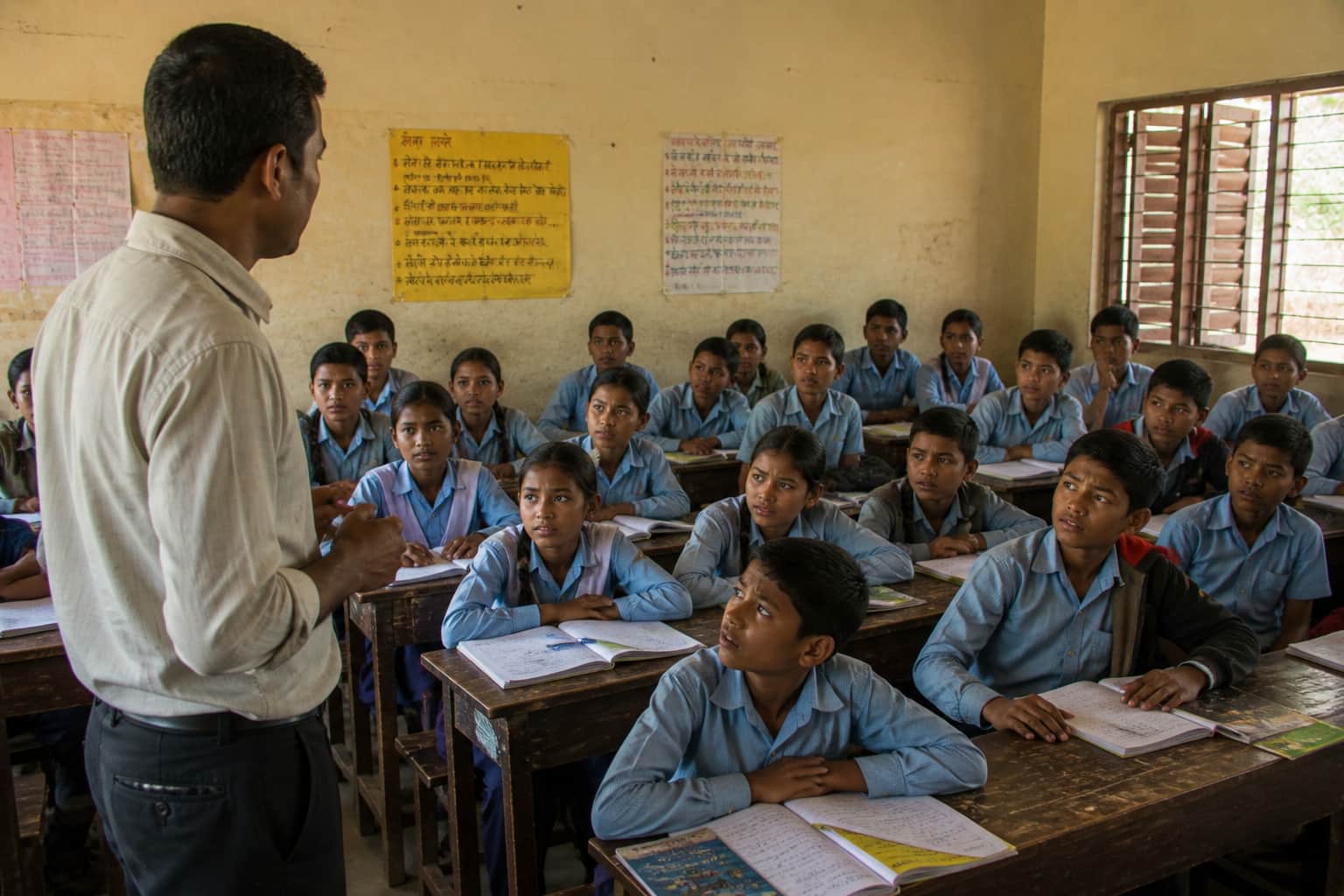
There is a difference between asking and checking. When we ask “do you understand?” we get a polite answer. When we check, we see real evidence of what each student knows. Good checking has three qualities. It is quick (seconds, not minutes), it covers everyone (not just the keen students), and it is used (you change what you do next based on what you see).
Choose the best answer. The right answer will turn green.
Be honest. Did you find out about the confident students only? Or did you have a way to see what every student understood?
- Most teachers find they only really know about a few students — the ones who answer often
- The quiet students may understand perfectly, or may be completely lost — without checking, you cannot tell
- If a method takes too long, you will not use it every lesson — that is why fast methods are so important
- The best methods take seconds and tell you about every student in the room
These methods take seconds. They cost nothing. They work in any class size. Try one or two this week.
Think about a topic you teach. How would you use each method to find out what your students really understand?
| Method | How I would use it |
|---|---|
| Hand signals | |
| Cold call | |
| Tell your partner | |
| Show me on the board / in your book | |
| Wait time | |
| Exit ticket |
Here are some examples of how each method could look in a real lesson.
| Method | Example in action |
|---|---|
| Hand signals | After explaining a maths method: “Thumbs up if you can do this on your own. Thumbs sideways if you need one more example. Thumbs down if you are lost.” |
| Cold call | After reading a paragraph: “Daniel, what was the main point?” You did not ask for volunteers. Now everyone is paying attention — they could be next. |
| Tell your partner | After teaching a concept: “In pairs, explain it back to each other. One minute.” Walk around. You hear ten different explanations. |
| Show me on the board / in your book | “Draw the water cycle on the corner of your page. You have 90 seconds.” You see every drawing in one walk around the room. |
| Wait time | You ask: “Why did the experiment fail?” The same fast students raise their hands. Wait. Five seconds. Now slower students are ready too. Choose one of them. |
| Exit ticket | Last two minutes: “Write one thing you learned today and one thing you are still unsure about.” Read them tonight. Plan tomorrow’s start around what you find. |
Q6. Watch the video below. Which old habit sounds most like yours? Which new method will you try first?
Host: Three teachers share how they used to check understanding, and what they do now.
Teacher 1: I used to ask “any questions?” at the end of every topic. The class was always silent. I thought silence meant they understood. It did not.
Teacher 2: I would ask one bright student to answer. He always knew. So I thought the class knew. But he was the only one who could answer.
Teacher 3: I gave a written test at the end of the unit. By then, students had been confused for two weeks. It was too late to help them.
Teacher 1: Now I ask everyone to show me with their hands. Thumbs up if they understand. Thumbs down if they do not. I see every student in three seconds.
Teacher 2: Now I use cold call. I do not ask for volunteers. I say a name. Any name. Every student knows they might be next, so every student is thinking.
Teacher 3: Now I check after every small step, not at the end. A quick question. A quick task. If half the class is wrong, I stop and re-teach. The next test goes much better.
Host: Do not wait for the test. Check often. Check everyone. Then act on what you find out.
Q7. For each method, choose the option that best describes where you are now.
Choose one method. Plan when you will use it. Decide what you will do if half the class is confused.
- “Do you understand?” almost never tells you the truth — you need a real way to check
- Good checking is quick, covers everyone, and changes what you do next
- Hand signals and cold call show you every student in seconds, with no resources
- Pair work and short writing tasks let you hear from many students at once
- Check often during the lesson — not just at the end of the unit, when it is too late
How useful did you find this lesson? Leave a rating and a comment to help other teachers.