Choose your language
Starting and ending lessons well
The first few minutes of a lesson are very important. When students come into your classroom, what happens? Do they sit down and wait quietly? Do they talk and move around? Does it take a long time before the lesson really begins?
And what about the end of the lesson? Does it finish clearly, or does it just stop when the bell rings?
Think about your own lessons. How do you start? How do you finish? And what do your students do in those first and last few minutes?
Q2: Which of these problems do you experience? (Tick all that apply)
- These problems are very common — most teachers experience them at some point
- A slow start often means less learning time and more behaviour problems
- A weak ending means students leave without remembering what they learned
- Small routines can fix most of these problems without extra resources
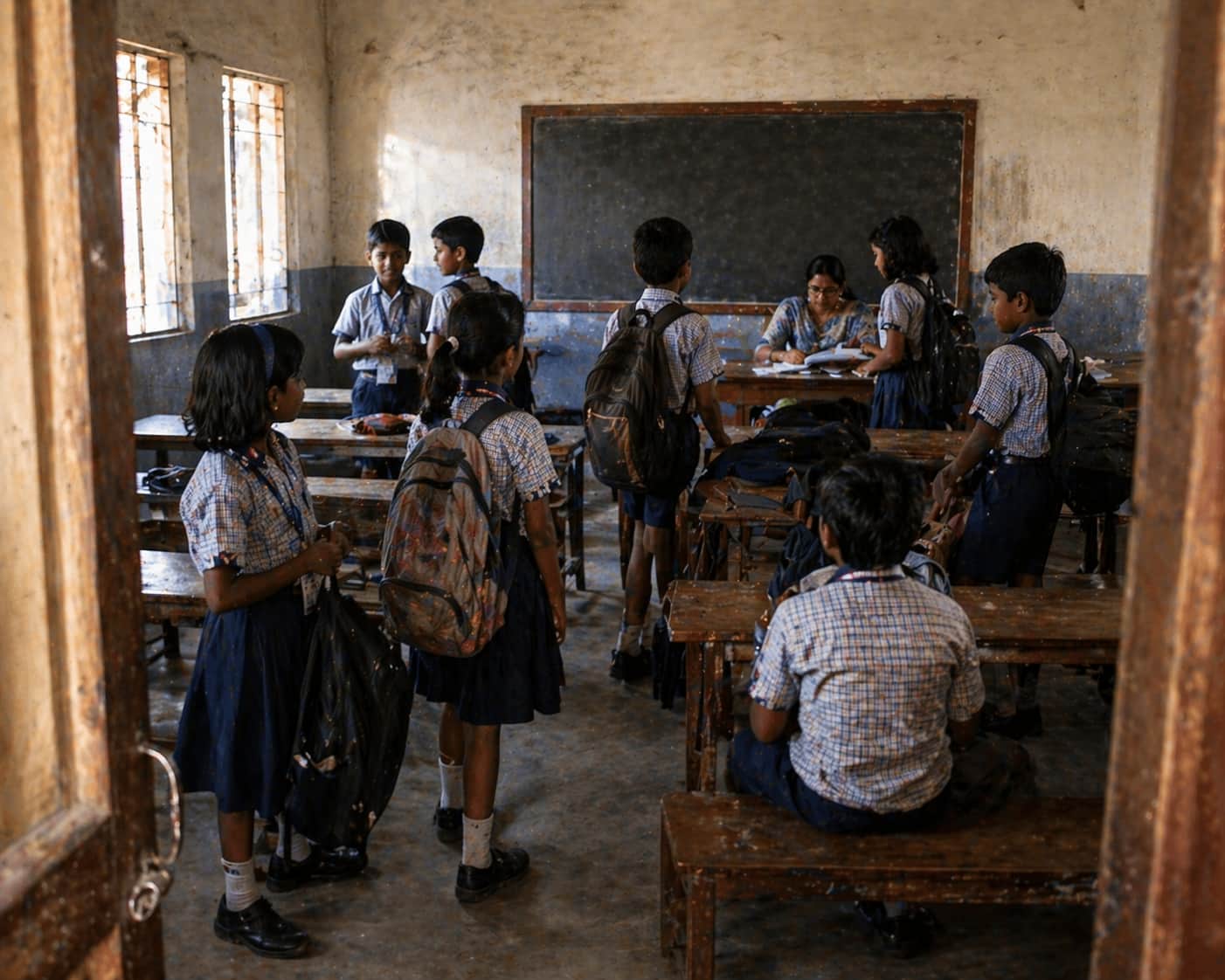
Think about learning time, student behaviour, how students feel, and what they remember from the lesson.
- Seven minutes of lost time every lesson adds up to many hours over a school year
- Students who are not settled find it harder to focus when the lesson does start
- Without a clear ending, students do not consolidate what they have learned — the last few minutes are a powerful time for memory
- Students may leave the lesson feeling it was not well organised — this affects how much they trust and respect the class
- The teacher loses control of the pace and energy of the lesson from the very beginning
Think about what the teacher could do before, during, and after students arrive.
| Strategy | Your ideas |
|---|---|
| Standing at the door | |
| A starter activity on the board | |
| Clear seating or routine | |
| Telling students the lesson objective |
These strategies help students settle quickly and start learning from the moment they arrive.
| Strategy | Why it works |
|---|---|
| Standing at the door | You greet students, see who arrives, and signal that the lesson is starting. Students feel noticed and settle faster. |
| A starter activity on the board | Students know what to do immediately. They start working before you say a word. Good starters review the last lesson or prepare for today’s topic. |
| Clear seating or routine | If students know where to sit and what to get out, there is no confusion. Routines take time to build, but once they exist, they work automatically. |
| Telling students the lesson objective | Students understand why the lesson matters. This helps them focus and gives the lesson a sense of direction. |
Think about what you want students to remember when they leave.
| Strategy | Your ideas |
|---|---|
| Stop two minutes before the bell | |
| Ask students what they learned | |
| Give a clear homework or next step | |
| End with a positive message |
The last two minutes of a lesson are very powerful for memory. Use them well.
| Strategy | Why it works |
|---|---|
| Stop two minutes before the bell | You stay in control of the lesson. Students do not pack up early. You choose when the lesson ends, not the bell. |
| Ask students what they learned | This is called a “plenary” or review. It helps students remember and shows you what they understood. Try: “Tell your partner one thing you learned today.” |
| Give a clear homework or next step | Students leave knowing what to do next. This connects today’s lesson to the next one. |
| End with a positive message | “Well done today” or “I enjoyed your answers in this lesson” takes five seconds and makes students feel good about coming back. |
Q6. Watch the video below. Think about which teacher’s idea you would like to try first.
Host: In the last activity, we looked at how lessons can be lost at the start and end. Now listen to three teachers. First, they share their problems. Then, they share what they changed.
Teacher 1: My lessons used to start very slowly. Students would arrive and just talk. Sometimes five, six, seven minutes passed before real learning began.
Teacher 2: My biggest problem was the end. The bell would ring and students would just leave. I never had time to check if they understood the lesson.
Teacher 3: I had a large class of 52 students. When they all arrived at the same time, it was very noisy and difficult to control.
Teacher 1: I started writing a simple question on the board before class. Just one question from the last lesson. When students arrive, they read it and write an answer. They are working before I even say good morning.
Teacher 2: I now stop the class two minutes before the bell. I ask one student to tell me one thing they learned. Then I say goodbye clearly. Students leave calmly. It takes two minutes, but it changes everything.
Teacher 3: I stand at the door now. I greet each student as they come in. I point to the board where the starter activity is written. By the time the last student arrives, the first students are already working. The class settles itself.
Host: Small changes to how you start and end a lesson can make a big difference to learning, behaviour, and how students feel about your class.
Q7. For each strategy, choose the option that best describes where you are now.
Choose the change that will make the biggest difference for your class. Write what you will do and when.
- A slow start wastes learning time and makes behaviour harder to manage for the rest of the lesson
- A starter activity on the board gives students something to do the moment they arrive — no instructions needed
- Standing at the door helps you greet students, settle them quickly, and show that you are in control
- The last two minutes of a lesson are powerful for memory — always plan a clear ending
- You do not need more time — you need clearer routines at the start and end of the time you already have
How useful did you find this lesson? Leave a rating and a comment to help other teachers.