Choose your language
Including every student
In the last lesson, you started to notice who you reach in your class, and who you miss. Now we move from noticing to acting.
What can you actually do, in a class of fifty students, to bring every student in? You cannot teach each child one to one. But you can change how you ask questions, how you set up pair work, where you stand, and how you give instructions.
Small changes that reach every student. Think about your last lesson. How many students really took part?
Q2: Which of these problems sound familiar? (Tick all that apply)
- These problems are common in every classroom — especially in large classes
- None of them mean you are a bad teacher — they mean the routines need a small change
- The fix is rarely a new lesson plan — it is usually a new habit, repeated every day
- Small changes to questioning, pairs, and instructions reach far more students than working harder on the same patterns
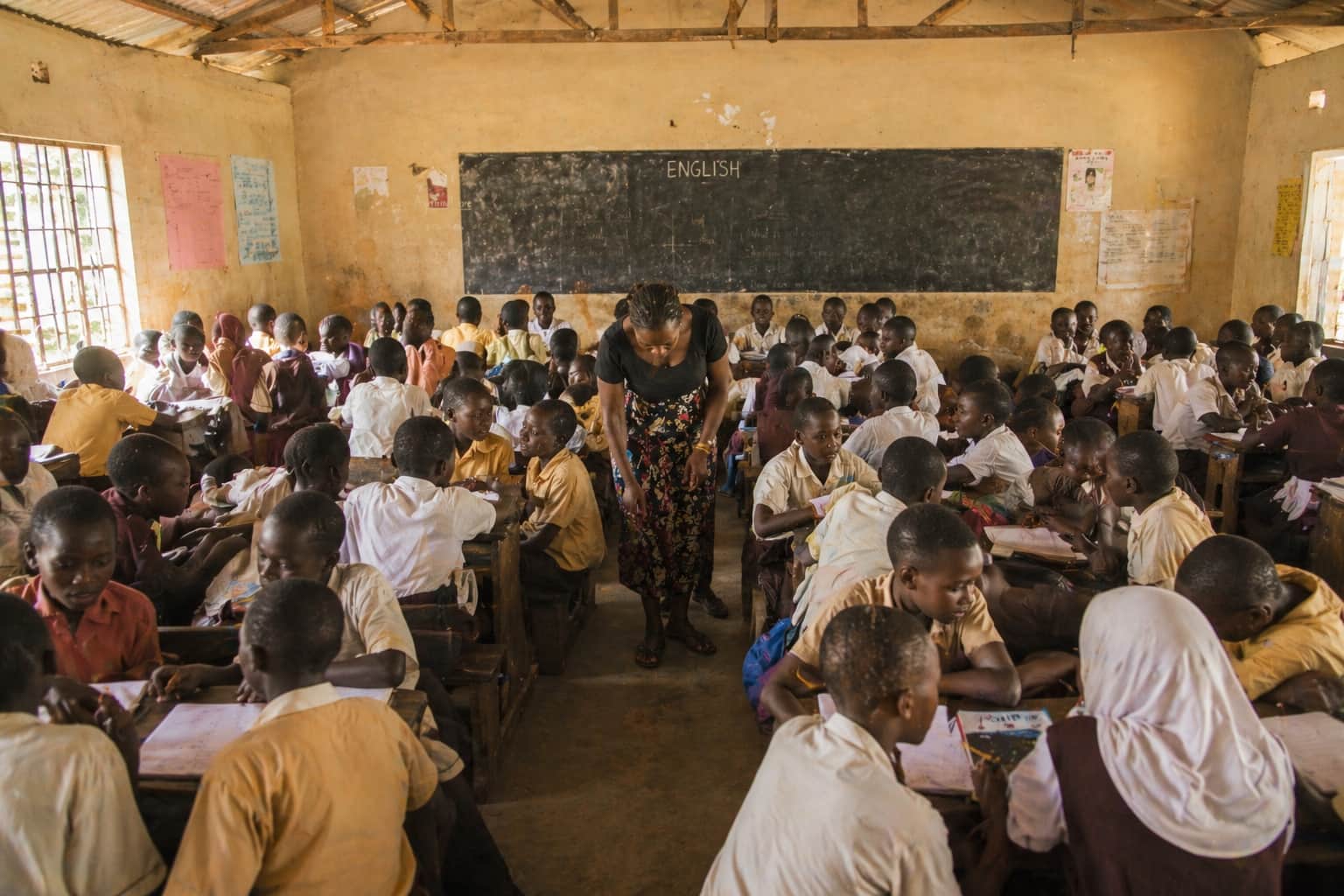
An inclusive lesson is not a special kind of lesson. It is a normal lesson where the teacher uses small habits that bring every student in. Here are four habits that work even in very large classes.
Ask a question. Wait. Count to ten in your head before you take any answer. Quiet students need time to think.
Tip: tell the class “think first, hands down”Choose a student by name instead of asking for hands. Be kind — if they don’t know, give a hint or move on, then come back to them.
Tip: warn them with a smile — never to embarrassAsk the question. Give thirty seconds. Tell pairs to share answers. Then take answers from pairs, not individuals.
Tip: rule — the quieter student speaks firstLong instructions lose half the class. Give one step. Check it is understood. Then give the next.
Tip: write the key word on the boardDrag each action into a box, or tap the action and then tap the box. The reveal explains each one.
Actions that leave students behind reward speed, favour the same few voices, and assume silence means understanding. The most common trap is “does everyone understand?” — nobody ever says no.
The good news: none of the inclusive actions cost money or time. They are habits. With a week of practice, they become normal.
Be specific. Is it boys? Front-row students? The fastest learners? The students whose names you remember most easily?
- The voices we hear most are usually the loudest, the fastest, and the closest — not always the smartest
- If hands-up favours the same students, cold call (with kindness) opens the room
- Pair-share before sharing means every student speaks before anyone speaks to the whole class
- You do not have to remove the strong voices — just make space for the others
Be specific to your class. What will you actually say or do?
| Strategy | How I will use it |
|---|---|
| Use think time before taking any answer | |
| Cold call by name (with kindness) | |
| Pair-share before whole-class sharing | |
| Give one instruction at a time | |
| Use a silent check (fingers, thumbs) |
None of these strategies need extra time or materials. They reshape what is already happening in your lesson.
| Strategy | How it works in practice |
|---|---|
| Use think time before taking any answer | Ask the question, then say “hands down, think first.” Count to ten in your head. Then choose a name. Quiet students start to think because they know they might be asked. |
| Cold call by name (with kindness) | Use names, not hands. Make it safe: “What are you thinking?” not “Tell me the answer.” If a student does not know, accept that, give a hint, or come back to them. Never use cold call to embarrass. |
| Pair-share before whole-class sharing | Every question can become a 30-second pair task before you take answers. Now every student has spoken at least to one person. Set a rule: the quieter student in the pair speaks first. |
| Give one instruction at a time | Break long instructions into steps. Say one. Write the key word. Ask one student to repeat it. Then move on. Slower learners and absent students catch up. |
| Use a silent check (fingers, thumbs) | Instead of “does everyone understand?” ask “show me one finger if yes, two if no.” Now you see every student’s answer at once — including the ones who never speak. |
Q6. Watch the video below. Notice how each teacher describes a problem first, then a small change. Which problem feels most like yours?
Host: We have just looked at simple ways to bring every student into the lesson. Now listen to three teachers. They share what was not working, then the change they made.
Teacher 1: I have fifty-two students. When I asked a question, the same hands went up. I told myself there was no time to wait. So I just took the first answer. The other students switched off.
Teacher 2: I tried pair work, but it always felt like chaos. The strong students did the work. The weak ones sat silent. The noisy ones shouted across the room. I almost gave up on pairs.
Teacher 3: My instructions were long and complicated. I would say five things at once. The clever students started straight away. The others looked confused. I thought they were lazy. They were just lost.
Teacher 1: Now I use think time. I ask the question. I count to ten in my head. Nobody puts up a hand. Then I choose a name. Any name. The students at the back have started thinking, because they know I might ask them next.
Teacher 2: I made one rule for pairs. The quieter student speaks first. Just that. The work changed completely. Every student now has a voice in the room, even if it is only to one other person.
Teacher 3: I now give one instruction at a time. I say it. I write the key word on the board. I ask one student to repeat it. Then we start. My students are not lazy. They were just not given a chance.
Host: Including every student does not need new equipment or a small class. It needs small choices, made every lesson. Think time. One instruction. The quieter voice first.
Q7. For each strategy, choose where you are now.
Write the strategy, the moment in the lesson when you will use it, and what you will say to the class.
- Including every student does not need a small class — it needs small habits, repeated every lesson
- Think time before answers gives quiet students room to think and join in
- Cold call (kindly) by name spreads attention beyond the front-row volunteers
- Pair-share before whole-class sharing means every student has spoken before anyone speaks to the room
- One instruction at a time and silent checks reach students who would otherwise get lost or stay silent
You have completed Lesson 2: Including every student. The next lesson goes deeper — into the harder cases. Students with disabilities, shy students, language differences, students from poorer families, and more.
How useful did you find this lesson? Leave a rating and a comment to help other teachers.