Choose your language
Managing gender dynamics
Think about your last lesson. Who answered your questions? Who raised their hand first? Who got more of your time and attention?
In many classrooms, boys speak more than girls. They get asked more questions. They take up more space. This is rarely because the teacher wants it that way. It is just a pattern that builds, lesson by lesson, often without anyone noticing.
This is not about blame. It is about awareness. When teachers start to notice these patterns, small changes can make a big difference — for girls, for boys, and for the whole class.
In this lesson, we will look at how gender shapes what happens in your classroom — and what you can do about it.
Q2: Which of these patterns do you notice in your classroom? (Tick all that apply)
- If you ticked any of these, you are noticing real patterns — not imagining them. They are common across the world
- Most of these patterns are unconscious. The teacher does not plan them. They build up slowly because of wider social patterns outside the classroom
- Awareness is the first step. You cannot change a pattern you have not noticed
- This lesson is not about making boys feel bad. It is about making sure all your students — girls and boys — get a fair chance to learn
- Small changes (who you ask, how you praise, how you arrange the room) make a real difference over time
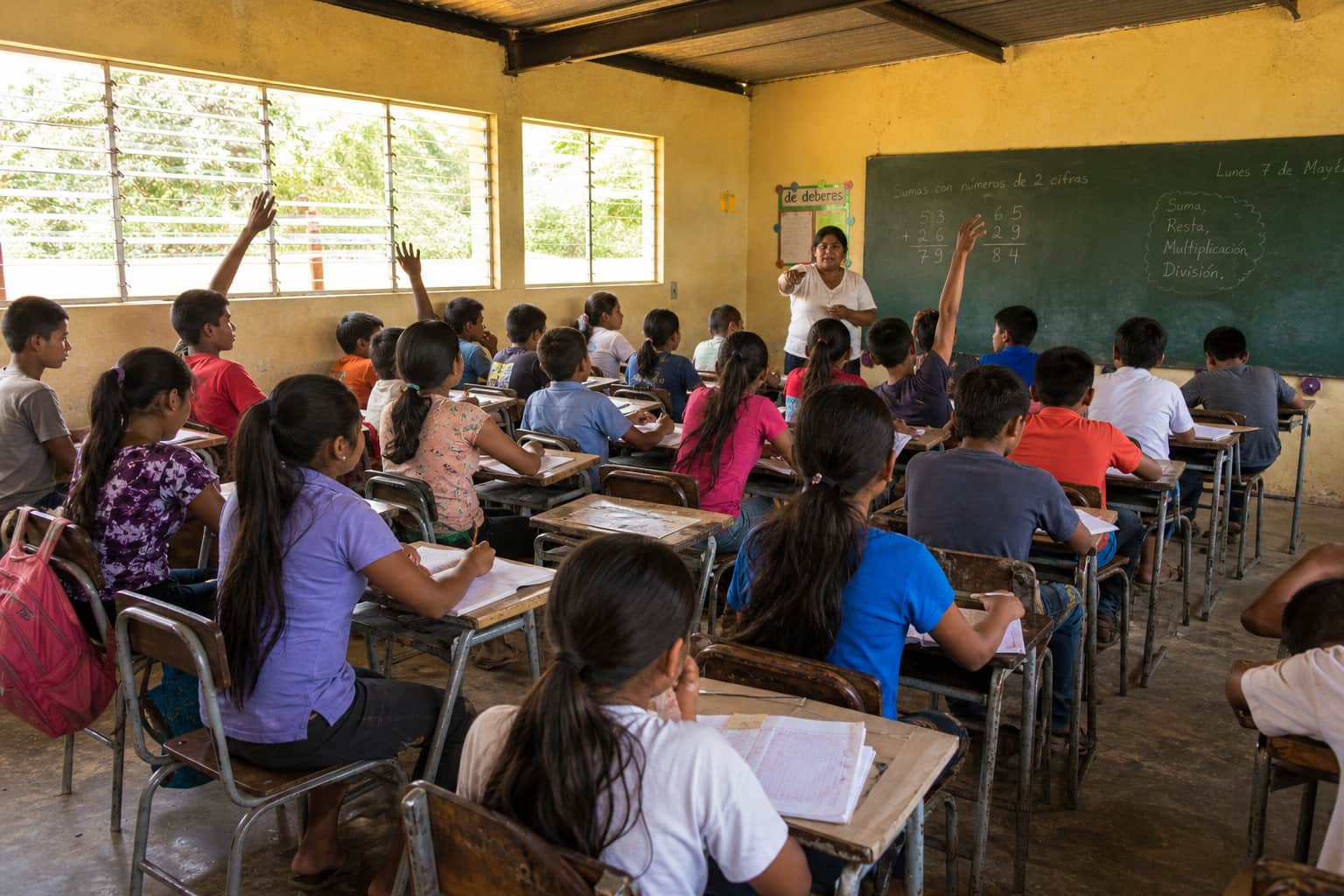
Gender bias in the classroom is rarely loud. It is quiet and everyday.
It hides in who you call on when several hands are up. In which words you use to praise (“clever” for boys, “neat” for girls). In who gets interrupted. In who carries the books and who cleans the board. In which jobs the textbook shows for men and women.
None of these are dramatic. But added together, lesson after lesson, they shape what students believe about themselves — and what they think they are allowed to do.
Be honest. Most teachers find an imbalance when they look closely. That is normal — it shows you are paying attention.
- Most teachers, when they really watch, find that boys get more attention — even when the teacher is a woman
- Boys often raise their hand faster. They speak louder. They take up more time. So they get more of you
- This is not because boys are smarter or more deserving. It is because they have been encouraged to take up space, and girls have often been encouraged not to
- If you find an imbalance, do not feel bad. The fact that you are noticing means you can change it
- One simple test: count. For one lesson, count how many times you call on boys and how many times you call on girls. The numbers often surprise teachers
Drag each move into a box, or tap a move and then tap the box you want to put it in. Some are small and easy to miss — that is the point.
Moves that make things less equal usually involve going with the easy flow — calling on the first hand, using the dominant pronoun, letting interruptions pass. None of these are bad on their own. But repeated, they shape who feels welcome to speak.
The most powerful move is the simplest: count. For just one lesson, mark a tally on paper for every time you call on a boy or a girl. The numbers tell you what no observation can.
Think about your specific class, your students, and what you can change starting tomorrow.
| Strategy | Your ideas |
|---|---|
| Use wait time before calling on anyone | |
| Track participation across one lesson | |
| Praise boys and girls for the same things | |
| Use gender-neutral language and examples | |
| Share classroom jobs equally |
| Strategy | How it can work |
|---|---|
| Use wait time before calling on anyone | Ask a question, then count to 5 silently before taking any answer. This gives quieter students — often girls — time to think and decide they will try. The fast hands have to wait their turn. |
| Track participation across one lesson | Keep a piece of paper on your desk. Make a tally mark every time you call on a boy or girl. After the lesson, look at the numbers. They will tell you what is really happening. |
| Praise boys and girls for the same things | Watch your praise words. If you say “clever” or “strong thinker” about boys, use those same words for girls when they earn them. If you say “careful” or “hard-working” for girls, use those for boys too. |
| Use gender-neutral language and examples | Mix “he” and “she” when you give examples. Use “they” for general statements. Show women as doctors, leaders, scientists in your examples — not just as mothers or teachers. |
| Share classroom jobs equally | Boys clean. Girls move desks. Boys take notes. Girls speak first. Mix the small jobs so no role is fixed by gender. The class learns that every job belongs to everyone. |
Q6. Watch the video below. Think about which change is easiest for you to try first.
Host: We have just looked at where gender bias hides in everyday classroom moves. Now listen to three teachers. They share what they noticed first, then the changes they made.
Teacher 1: I always thought I treated my class equally. I am a woman. I care about my girls. But one day a colleague observed my lesson and counted. I had asked boys 23 questions and girls only 8. I did not believe her until she showed me the tally. I felt embarrassed.
Teacher 2: My problem was praise. I noticed I was telling girls “Well done, very tidy work” and telling boys “Good thinking, very clever”. The girls were getting praised for being neat. The boys were getting praised for being smart. Different messages, every lesson.
Teacher 3: In my class, the boys took all the space. They sat at the front. They answered first. They moved around. The girls stayed quiet at the back. I had stopped seeing it because it had always been this way.
Teacher 1: After my colleague counted for me, I started counting myself. Just for one lesson a week. I keep a small piece of paper on my desk and tick. Boys, girls, boys, girls. The numbers do not lie. Now I make sure I ask girls just as often. Some of them have started raising their hands more.
Teacher 2: I changed my praise words. Now I say “Sara, very clever idea” and “Daniel, very neat handwriting”. Same words for everyone. After a few weeks, my class started believing those words could belong to anyone.
Teacher 3: I changed the seating. I mixed boys and girls at the same desks. At first some of them did not like it. After two weeks, the room felt different. Quieter students were speaking. The boys were listening. It was a small change but it changed everything.
Host: Counting, praising fairly, mixing seating — these are small actions. But repeated every lesson, they reshape who feels they belong, and who feels they have something to say.
Q7. For each strategy, choose the option that best describes where you are now.
Don’t try to change everything at once. Pick one thing. The smallest, most concrete change you can think of. Write exactly what you will do.
- Gender bias in classrooms is usually unconscious — most teachers never plan it, but it builds up in small everyday moves
- The first step is noticing. Count who you call on, watch your praise words, look at who takes up space
- Wait time (5 seconds before calling on anyone) is one of the simplest and most powerful tools — it gives quieter students time to think
- Praise boys and girls for the same things. Use the same words. Children learn what they are allowed to be from how you describe them
- Small changes, repeated every lesson, reshape your classroom — not just for girls, but for every student who has something to say
How useful did you find this lesson? Leave a rating and a comment to help other teachers.